Showing posts with label maserati. Show all posts

Thursday, 18 July 2019

MASERATI TIPO 60, DEBUT AND VICTORY AT ROUEN ON 12 JULY 1959


MASERATI TIPO 60, DEBUT AND VICTORY AT ROUEN ON 12 JULY 1959

Tipo 61 Birdcage Nino Vaccarella Targa Florio 1960

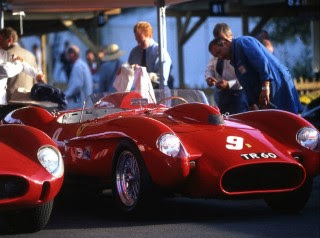
 On 12 July 1959, the Maserati Tipo 60 “Birdcage”, with the 30-year-old Stirling Moss at the wheel, made its race debut in the Sport category at Rouen. The Tipo 60 recorded its first win, defeating two Lotus 15 cars and getting the fastest lap in 2.28.5 at an average speed of 158.594 km / h. This was just the first of a long series of victories: the Birdcage also won four Italian Hill Climb Championships (driven by Odoardo Govoni in 1960-1961-1962 and Nino Todaro in 1963) and two Italian circuit racing Championships (in 1960 with Mennato Boffa and 1963 with Nino Todaro).
In 1958, the Orsi family, at that time the owner of Maserati, decided to assign engineer Giulio Alfieri, technical manager, the project to identify new technical solutions to make the competition cars even more competitive. Alfieri was given complete freedom of action, and this provided the basis for a historic turning point for the company. The initial idea was to build a new car with a monocoque structure, but this proposal did not go ahead. In October 1958, Alfieri and his collaborators discussed how to achieve lightweight combined with very high torsional rigidity. They designed a revolutionary chassis consisting of around 200 steel tubes of very small diameter (between 10 and 15 mm) which, combined together in very short lengths in a complex mesh, formed a birdcage structure - hence the car's nickname, “Birdcage”.
For the Tipo 60 a compact 2-litre four-cylinder engine was mounted in the middle of the car, at a 45° angle to reduce space at the front and lower the centre of gravity. This gave the car exceptional balance in terms of both weight and aerodynamics. The engine, derived from that of the 200S, was suitably modified, with an almost complete restyling of the cylinder head, shifting the exhaust to the right-hand side. The bore/stroke ratio also changed from the 1.226:1 (92x75mm) of the 200S to 1.302:1 (93.8x72mm). The car was equipped with two Weber 45 DCO3 carburettors, battery-powered twin ignition with Marelli and a maximum power output of 200 hp. The suspension systems consisted of spiral springs at the front and De Dion rear axle with single transverse leaf spring. The technical solutions adopted by the Type 60 made it possible to limit the weight to 570 kg.
Construction of the first car was completed during May 1959, with a chassis consisting of completely rigid high-quality chromium steel tubes. This first unit was handed over to Stirling Moss, who performed a variety of test drives, on the Aeroautodromo at Modena and at the Nürburgring. However, during these test drives Alfieri realised that because of the steel's high rigidity, a large number of hairline fractures were appearing in the welds, putting the safety of the driver at risk. He, therefore, surprised everyone by deciding to replace the high-grade steel with one of relatively average quality, which would not generate these adverse effects in response to stresses, enabling the chassis to settle without creating fractures. Giulio Alfieri's idea was the right one, and his many critics were proved wrong.
Thanks to the victory achieved in Rouen on 12 July 1959 and to other prestigious results, the Tipo 60 "Birdcage" became the object of great demand from private teams and Gentlemen Drivers who could afford the high purchase price of the “Birdcage”.
The “Birdcage” attracted a great deal of attention from teams competing in 3 litre Sport cars in the U.S.A. This persuaded Maserati to consider a solution which would satisfy the demands of its best customers. The four-cylinder engine was upsized to 2,890 cc. This boosted its power by 50 hp and the total weight of the car (now known as the Tipo 61) increased to almost 600 kg due to the adoption of a new larger propeller shaft. Fuel consumption was more or less unchanged, and this was vital in endurance races, where the Birdcage was able to drastically reduce the number of refuelling stops. In 1960 Maserati did not field an official team but decided to support Lloyd Casner's U.S. Camoradi team, which lined up two Tipo 61 cars at the Nürburgring 1,000 Km. The crew comprising Stirling Moss and Dan Gurney won the event, while Masten Gregory and Gino Munaron finished third. During the Le Mans 24 Hours, one of the Maserati Tipo 61 cars entered reached a speed of 270 km/h, setting a new record for a 3 litre Sport car. In the same year, Masten Gregory and Lloyd Casner, achieved another victory at the Nürburgring, fighting off the Ferrari 250 TR 61 driven by the Mexican Rodriguez brothers.
The last two Tipo 61 cars were produced in January and February 1961. In the same year, three Tipo 61/76 engines were built.
Key technical features of the Tipo 60 - Tipo 61:Engine: vertical straight four
Displacement: 1,990 cc - 2,890 cc
Power: 200 hp - 250 hp
Transmission: Mechanical five speed + reverse en-bloc with the differential casing
Chassis: birdcage
Weight: 570 kg - 600 kg
Top speed: 270 km/h - 285 km/h
Maserati S.p.A.Maserati produces a complete range of unique cars with an amazing personality, immediately recognisable anywhere. With their style, technology and innately exclusive character, they delight the most discerning, demanding tastes and have always been an automotive industry benchmark. Ambassadors of this heritage are the Quattroporte flagship, the Ghibli sports sedan, the Levante, Maserati’s very first SUV, and the GranTurismo and GranCabrio sports cars. A range complete as never before, with petrol and diesel engines, rear and all-wheel drive, the finest materials and outstanding engineering. A tradition of successful cars, each of them redefining what makes an Italian sports car in terms of design, performance, comfort, elegance and safety. 
For more information on Maserati, visit: www.maserati.com

Tuesday, 14 May 2019

MASERATI CELEBRATES THE VICTORY OF THE TIPO 6CM IN THE 1939 TARGA FLORIO


MASERATI CELEBRATES THE VICTORY OF THE TIPO 6CM IN THE 1939 TARGA FLORIO


Modena, 14th May 2019 – Maserati celebrates the eightieth anniversary of Luigi “Gigi” Villoresi's impressive win at the 1939 Targa Florio at the wheel of the Maserati Tipo 6CM. The Milan-born driver achieved victory at the Parco della Favorita circuit in Palermo, Sicily on May 14th 1939 by covering the race's 40 laps, totalling 228 km, in 1:40.15.4. Luigi Villoresi also recorded the fastest lap in the race with the time of 0:02.24.6, averaging 141.908 km/h. Piero Taruffi and Guido Franco Barbieri finished second and third, also in Maserati Tipo 6CM cars. It was a historic result for Maserati, confirming its undisputed leadership in the prestigious Sicilian race. Maserati had also dominated the 1937 and 1938 editions, taking the first three places in both years. Luigi Villoresi also finished first in the 1940 edition, driving a Maserati Tipo 4CL.

The Targa Florio, one of the world's oldest and most famous automotive races, is named after Vincenzo Florio. Florio, a wealthy Palermo businessman already well known in the racing world, created, funded, and first organised it in 1906. In total 62 editions of the Targa Florio took place from 1906 to 1977 (it was not held during the two World Wars). The race was held every year, normally in May, on the roads of Palermo. Sicilian roads, especially the narrow, winding roads through the Madonie mountain range, always played a central part in this race. It was only in the years from 1937 to 1940 that the event was held at the Parco della Favorita circuit in Palermo.

The Maserati Tipo 6CM, an amazing single-seater racer, was designed by Ernesto Maserati and began to take shape in 1935. The car was fairly conventional in looks but its contents were extremely advanced. Even more ground-breaking than the new engine (a straight six with the cylinders cast in the same block as the head and arranged in pairs on the same elektron crankcase, twin overhead camshafts driven by a rising gear chain, 2 valves per cylinder and a Roots volumetric supercharger, providing a maximum power of 175 HP), the car's most distinctive feature was its chassis, which marked a major step forward in vehicle design. The basic structure was still the ladder frame, but with innovative front suspensions which provided a major advantage over English and French competitors. The suspensions consisted of torsion bar springs mounted so that the spring tension could be adjusted to suit the characteristics of the circuit. Like the rest of the car, the bodywork was updated in a variety of ways, especially with regard to its aerodynamics. The extremely rounded shapes, the succession of different side panel forms and the more slanted front clearly reflected the research into aerodynamics ongoing throughout the years of its construction. This car's racing supremacy reached its peak in 1938 when it triumphed over the formidable British ERA cars that had always been the Italian constructors' most dreaded rivals. The same year also saw the debut of Alfa Romeo's famous Alfetta, created for the Vetturette Grand Prix competitions. However, to the Maserati Brothers' great satisfaction, that year the Tipo 6CM also defeated the Alfetta at the Pescara GP.

The Maserati Tipo 6CM proved to be a highly successful car: 27 were built, from 1936 to 1939, and the model won races on Europe's leading circuits, both with the official team and with gentlemen drivers at the wheel. The Maserati Tipo 6CM holds the record for the most edition wins at the Targa Florio, with three victories in 1937, 1938 and 1939.

The Maserati Tipo 6CM, perfectly restored to its original livery, is held in Modena and belongs to the Panini Collection.

Key technical features of the Tipo 6CM:

Engine: vertical straight six
Displacement: 1,493.2 cc
Power: 155-175 hp at 6,200-6,600 rpm
Transmission: Four speeds + reverse
Chassis: 2 chassis beams with steel cross-members, aluminium bodywork
Weight: 650 kg
Top speed: 210-230 km/h


Thursday, 11 September 2014

GOODWOOD REVIVAL COUNTDOWN


Goodwood Revival
Goodwood Revival - start your engines...
With only days to go until the Revival kicks off, the Goodwood Motor Circuit is littered with the incredible classic cars and aircraft that have inspired so many people to come to our corner of West Sussex. It's an awesome sight and is only enhanced by the nostalgia-fest created for you to enjoy.

We are now able to confirm that an amazing 16 Maserati 250Fs will gather together for our 60th anniversary celebration of the car. Considering only 29 were built, this is a really special addition to the event. To complement the 250Fs in action in the Richmond Trophy, one area of the Paddocks has been designed in the style of the 1954 Italian GP at Monza - cameras at the ready...

Be a part of the event with our Revival Stream - just use #GoodwoodRevival when posting on social media. You'll also find the latest news, videos, photos, competitions and more.

For the all the latest news on this must-see event, please read below. You can also like us on Facebook and follow us on Twitter for regular updates, news and competitions.
Read More
Revival Tickets
Huge Maserati 250F gathering taking place at the Revival
To mark the 60th anniversary of the 250F, an incredible 16 of the 29 built will gather at Revival. Don't miss the sights and sounds of the iconic machine battling in the Richmond Trophy, or taking part in our daily track parades.
Read More
Brabham climbs into Fabrizio Giovanardi's St Mary's seat
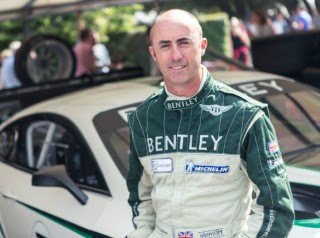
David Brabham will step into Fabrizio Giovanardi's shoes for the St Mary's Trophy this weekend, after the Italian was forced to relinquish his place. Brabham will campaign a 1959 Alfa Romeo Giulietta - a car he has not driven before. 
Read More
Nick Mason heads up the Revival's fastest family
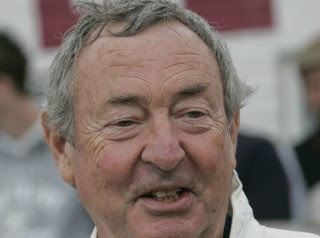
The Revival is a great family occasion. Just ask the historic motor racing world’s favourite drummer, Nick Mason. He will be joined on the race schedule by his wife, daughter and son-in-law.
Read More
Help support iconic 1950 BRM V16
Help support iconic
1950 BRM V16
This year's Revival will support the preservation of an iconic British F1 car, the BRM V16 Type 15. You can help this cause via the Richard Burns Foundation collection buckets on site all weekend.
Read More
Limited edition vintage toys on sale
Limited edition
vintage toys on sale
They say that childhood is not like it used to be - you can help correct this by picking up some vintage toys at the Revival thanks to a project led by Tesco for its T for Toys shop, located Over the Road.
Read More
Limited availability for hospitality
Last call for the
Goodwood Mess
There is still a chance to book a table in one of our luxury hospitality areas. Since general admission has sold out, a table at the Goodwood Mess could be your only route to attend the Revival this year.
Read More
Archive gallery: Ferrari racers from the Revival over the years
Is there a more evocative marque than Ferrari? The howling engines, the Tifosi, the history… not to mention the incredible values. Take a look at our gallery, where we've gathered together some of the finest Italian automobilia ever raced at the Revival.
Read More
#GoodwoodRevival - see your pictures on our site
If you want to see your pictures, videos or comments appear on our Revival Live Social Stream alongside the best we've unearthed, then use the #GoodwoodRevival tag on your updates before, during and after the event.
Read More